 Published by Lovesick Scribe
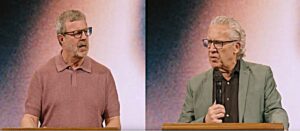
The following transcript came from a meeting that was held on February 3, 2026 at Bethel Church in Redding, California. At least four hundred people were in attendance at this meeting. The contents of the meeting pertained to the recent events surrounding the exposure of Shawn Bolz as a false prophet and allegations of sexual deviance in the presence of former staff members. This meeting was held prior to the allegations made public concerning Ben Armstrong. This transcript was provided by an attendee of this meeting.
Bethel Church – February 3, 2026
Key Questions and Full Answers (Context Preserved)
Question: Harm Caused by the Prophetic
Asked by Havilah Cunnington:
“I wonder, for those that do feel victim to the prophetic or to moving their family here, being a part, buying Shawn’s books, attending the conferences, and they are, they feel victim to that for good reason. What would you say to them? And I know you’ve said a lot, but I really think we want to hear from you.”
Answer — Bill Johnson
“I think if I can be totally frank. I think it’s worth it.
I think becoming a part of what God’s doing here, in spite of the failures, in spite of the blemishes, in spite of the wrong decisions. You know, that’s not who we are. It’s what we call incredible impact.
But Caiaphas prophesied that Jesus was going to die for the nation bring the whole nation together. He was a man with murderers… that God used him to bring the Word of the Lord. Don’t be real quick to throw out anything that you heard from somebody who has been wrong. Be careful before you throw it out, before you flush it.”
Follow‑Up: Retaining Words from Disqualified Leaders
Clarification by Havilah Cunnington:
“You’re saying that God, in His wisdom, cannot lose the beauty of what God has done in and through us… and yet we have been victimized is something serious.”
Answer — Bill Johnson
“I’ve got words I’m saving from people that I no longer trust… and so I’m not flushing those words.”
Question: TBN Appearance and Endorsement After Meeting a Victim
Asked by Havilah Cunnington:
“One of the most painful and confusing parts was after you met with a victim, why go on TBN? Why write an endorsement? Why?”
Answer — Bill Johnson
“I used a biblical concept that I lived by, but I misapplied it… Jesus called Peter a rock when he was a broken reed. I blew it on this one. I missed God on that so badly.”
Question: Why Leadership Waited Until a Podcast
Asked by Michelle (audience question texted/emailed):
“Why did our pastors wait until a podcast came out drawing attention to this to openly apologize?”
Answers
Dann Farrelly:
“We didn’t think it was our responsibility.”
Kris Vallotton:
“My thinking, which is flawed… I thought we did our bit. I no longer feel that way.”
Question: Permanent Removal from Leadership
Asked by Michelle (audience question texted/emailed):
“When leaders fall, is it correct that they are restored into leadership, and are there actions that biblically should remove someone permanently from leadership?”
Answer — Bill Johnson
“Really it’s case by case situation. Yeah, it’s not that one person gets more favor. It’s that each situation demands a different response. Sometimes people just need to be removed from ministry entirely, altogether. When I’ve been involved in situations like that, and say, “Listen, I have zero interest in you being restored to ministry. My only interest is you being restored as a human, as a man before God.” And so that’s my conversation with them.
They’re wanting to get back to ministry. I have zero desire for them getting back to ministry. I don’t want that to even be the rabbit that motivates them. I want them to get right, because they need to get right. And so that’s, that’s my interaction. And if, after time somebody has been removed, you see that God’s put a grace on their life. You know that’s, that’s where you get a council people together, they can pray through it, evaluate that situation. I don’t like hard and fast rules. Personally. I don’t like if somebody commits this sin, they have two years to recover, because they may not deal with it in two years. I think it’s probably case by case, where people a re known and tested and tried and really see if we can entrust stuff to them.”
Answer — Dann Farrelly
“I think there’s lots of scriptures that need to be brought to bear on that. And so as far as is the did they respond in repentance and when they’re confronted. And if you have somebody respond in repentance, I think you can, you can have a new vision for who they are, and then who potentially they can be. You know, the classic one is Peter, right? He denies Jesus three times, and Jesus needs him the most, and then Jesus finds him, goes, you know, Feed my sheep, you’re going to be like leading my church. And so the idea that people can Christ put that guy the biggest failure, with Jesus leaving the most, put him in charge. So Jesus has a bit of an odd take about that that is a little uncomfortable. I’m sure when other people were martyred, they’re like, Peter lied, you know. And you know, just as you think about people who gave their lives for the in martyrdom, they had to look and go, Jesus actually trusted his church under this apostolic gift that was on Peter as well. So it gets confusing… But again, no one empowers scary people. You know, Peter again got rebuked by Paul… So there’s some nuance to this. It is easier to lift the straight on rules. I get that easier. Just don’t see this. That’s the gospel kind of function that way.”
Question: Discernment Failure
Asked by Michelle (audience question texted/emailed):
“Where was discernment in this and how are we growing in this area?”
Answers Bill Johnson:
“The problem wasn’t discernment… it was awareness of responsibility.”
Kris Vallotton:
“Love covers a multitude of sins. It’s easy to turn your discernment way down when you love somebody.”
Direct Quotes Concerning Bob Hartley
Havilah Cunnington:
“What are we going to do about the other men that have been brought up, like Bob Hartley? I’m naming him because we’ve named him publicly. But there’s others that are being brought up, what do we—what’s our plan for that? And are we expecting, as a church community, to watch us go through this, or are we actually like—what’s the process?”
Kris Vallotton:
“I think with Bob Hartley, I think we’re looking at timelines, because we obviously did excommunicate Bob Hartley and we sat him down in 2017. The question in 2017 is, what information do we have? The information I remember was that Bob… Jason had watched him Google someone when he sat behind him. So that was the first time. There was no information that came to us. We saw—we caught it and so I met with him. I met with him the first time, and I just said, “You can’t minister in here anymore.” He had went through a divorce, I think, around 2015, but don’t quote dates, because I’m really bad at dates.
We wanted him to stay in our environment to get well. He wasn’t a full-time person here. He was mostly IHOP. There was many conversations about like, ‘Hey, you’re still ministry.’ ‘Well, those are my friends.’ And no, no, we said, ‘No ministry.’ And then later on, it came out—it was a few years later, sometime later—that there was really serious sexual misconduct. And that just led to, you have to be—you’re a danger. And since then, we’ve had interaction with some victims. Very dangerous man. You look back and you’re like, okay, how come it took so long? Having grown up as a victim myself… yeah, that wouldn’t last more than one week.”
Dann Farrelly (brief interjection)
“Your point is that we are going to go through the timeline.”
Later Reference (Kris Vallotton, comparative discussion)
“Bill and I were in Pennsylvania and Bob Hartley called… And he came to lunch, and it was 10 leaders, and Bill and I. I’ll never forget this for as long I live. He had no idea who was in the meeting. None. He couldn’t have known who was in the meeting. There was no way for him to Google information. And I think it was before. And we sit down, and Hartley looks over. He goes, ‘Oh, you have a son named Joshua.’ Because yeah. He goes, ‘Oh yeah, the Lord healed his brain last year,’ and the guy starts sobbing. He said, ‘Joshua had a brain tumor and had a brain tumor operation.’ He goes, ‘And it’s never going to come back.’ He did that 10 times. I’d never seen anyone operate in a word of knowledge like that.
I watched Shawn do that in meetings where I bring him in and he would just minister to leaders that I just brought him randomly. Couldn’t have known who’s in the room. ‘Your daughter plays piano.’ ‘What’s her name is it?’ ‘Beth.’ ‘Bethany.’ Yeah. And so, you know, these gifts and callings of God are irrevocable. Someone falls off the Jesus wagon, they get to take the gift with them. And so, you know, that was very confusing too.
And then, and then, you know, but then Shawn, on the Shawn side, he started having words of knowledge, like on steroids, and I, and I questioned him many times. It’s like, ‘We need to—Lord came to me at night.’ I’m like, ‘Well, is that an angel of the Lord or is it an angel of Google?’ And I really did. I talked to Bill about a couple of times that seemed like I’m—I’m concerned. And then the way he brings the words, like, he hasn’t reached out, where he gets there, there was, there was like—no, I’m looking back. Mindsets like, obviously, but not so obvious.
When you watch someone perform—like, I say perform, I’m sorry, minister— like that, behind the scenes for years and years, and then what? And then, you know, the question you have to ask yourself, in all these men’s cases, the sexual stuff is really hard. I can’t imagine it, but why did you even do that? You had such a beautiful gift, you know, like, you didn’t have to fake it. Why did you fake it? And so I still ask that question, and it’s such a warning to our teams, such a warning that name and the need to be, you know, amazing, the ministry can kill you and kill a bunch of people. And so, you know, my take on—on—I like that Bill said, by the way, I agree with—but Shawn’s ministry became a mixture. It became a mixture, like it was ministering, often powerful prophetic words. And then there was like, ‘That crap. I don’t know what that is.’ And so it became very confusing. And it became more and more confusing towards the end, as he obviously started to rely more and more on that other things he was doing. And I think, honestly, the anointing lifted from him. And when it did, I think this is my—this is my observation— when anointing began to lift from him, because the gift and calling are always there, I think he started leaning more on that other thing he was doing, and I think it became, as the time went on, the mixture got worse and worse.”
Listen to this episode discussing Ben Armstrong and the recent Bethel meeting here: The Very Awkward Prophetic Flo… – The Lovesick Scribe Podcast – Apple Podcasts
Research: New Apostolic Reformation
CRN has compiled a list of false teachers and several other professing Christians we’ve warned you about over the years. The list also contains those we must keep an eye on plus movements, organizations and “frauds, phonies and money-grubbing religious quacks” to mark and avoid as per Romans 16:17-18