 (Doug Ladner) There are books that inform, and there are books that unsettle, and every so often a book manages to do both at once. Keri Ladner’s American Dominion: The Rise and Radicali)zation of a New Christendom is that kind of book. I do not say this lightly, and I do not say it as a matter of political fashion. I say it as someone who has spent a good many years sitting across from people whose faith was bent and used against them, and who has come to recognize how much of the damage traces back to the very theological currents Ladner is tracing here. This is a book I believe every Evangelical Christian in this country needs to read, even — perhaps especially — those who will find parts of it uncomfortable.
The great strength of American Dominion is its first half, where Ladner does the patient, unglamorous work of intellectual history. She does not begin with the New Apostolic Reformation itself but reaches back to the early years of the last century, to figures like Charles Fox Parham and William Seymour at the headwaters of American Pentecostalism, and then traces the thread forward through Aimee Semple McPherson, William Branham, and a good many others whose names have mostly faded from popular memory…. Continue reading
 (Nick Peters – Deeper Waters) Should we expect to hear the voice of God? Let’s plunge into the Deeper Waters and find out.
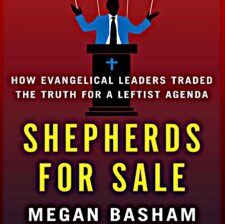 “The details of each chapter vary. In the case of COVID, for example, evangelical leaders platformed a guy (Francis Collins) who was literally paid by the government to message their political agenda, and then those same leaders turned around and called evangelicals ‘conspiracy theorists’ if they didn’t accept what Collins (and, by extension, the government) was saying. That is the most direct case of evangelical leaders being misled by political money.”
 (David Morrill) The online pushback and downright vitriol directed towards Daily Wire writer and reporter Megan Basham in advance of her book
  True, the church may need to repent for certain forms of collective guilt, but the church is made up of people from all races and ethnicities. Christians are called, like the good Samaritan, to offer aid to those in need; still, the Samaritan in the parable bears “no moral guilt for what happened.”
 (Ray Fava – Evangelical Dark Web) The Christian Nationalist movement is growing rapidly in Evangelicalism with the success of multiple books by its proponents and a cottage industry for its adversaries. Andrew Isker builds on
 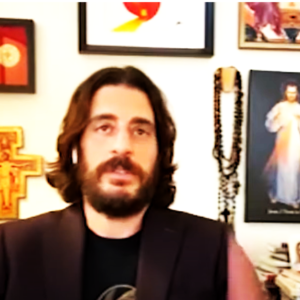 “The Chosen portrays the Good Samaritan as a true story, as opposed to a parable, and uses this premise to leverage an emotional payoff. But the premise of the Good Samaritan parable actually happening and meeting a villain of that story distracts from the emotional sensation that the show was going for. Instead of feeling powerful, it feels cheap.”
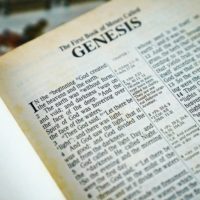 Usually theological liberals try to argue that there are two creation accounts, that days should be translated as eras, or some sort of God-guided Darwinian evolution. The Gospel Coalition instead argues that the entire seven-day framework is an analogy. They are not answering the question of seven days or seven eras, they are denying them entirely, writing them off as a “literary analogy.”
 (John Lanagan – The Word Like Fire) It only takes a few popular Christian leaders with national profiles to embrace a teaching that sounds Christian to bring about big changes in the church. –Ray Yungen