 “At first, the [Cuckoo] egg looks harmless. It is just a conference, a book study, a worship song, a guest speaker, a “revival culture” seminar, or a prophetic ministry night. But once the egg is accepted, it begins to grow inside a nest that others built. The church may still have the old name on the sign, but the spiritual DNA inside the church begins to change.”
(Don Pirozok – The Danger of NAR Church Leven) The danger is that the leaven does not usually enter saying, “We are here to take over your church.” It enters saying, “We are here to bring revival, destiny, activation, alignment, impartation, and greater authority.” But once accepted, it quietly redefines Christianity. Humility becomes greatness. Elders become inferior to apostles. Scripture becomes incomplete without fresh revelation.
The Great Commission becomes cultural takeover. The blessed hope becomes delayed until the church conquers the world. The cross becomes a stepping-stone to human exaltation rather than the place where the old man is crucified.
The Bible uses leaven as a picture of something small that spreads quietly until it affects the whole lump. Jesus warned, “Take heed and beware of the leaven of the Pharisees and of the Sadducees” and then explained He meant their doctrine (Matthew 16:6, 12). Paul said, “A little leaven leaveneth the whole lump” (Galatians 5:9; 1 Corinthians 5:6). So when false doctrine enters a church, it may not immediately look like a takeover. It often begins as new language, new conferences, new songs, new books, new “prophetic” excitement, new leadership models, and new promises of revival. But over time it changes the church’s authority, mission, identity, and loyalty.
 The NAR is difficult to measure statistically because it is not one formal denomination with one membership roll. It operates more like a network of apostles, prophets, ministries, schools, worship movements, conferences, prayer movements, and church networks. That is part of its strength: many people can be influenced by NAR teaching without ever being told, “You are joining the NAR.” Scholars and watchdog groups describe it as a movement of churches and organizations that share belief in present-day governing apostles and prophets who claim authority to release new truths for advancing God’s kingdom. One academic article notes that C. Peter Wagner claimed as early as 1999 that there were at least 40,000 “apostolic” churches in the United States, representing 8 to 10 million members, and that the movement was growing on six continents. Those numbers are older and came from Wagner’s own claim, so they should be used carefully, but they show the scale of what the movement believed it was building.
The first leaven is the appeal to human greatness. Instead of preaching the cross, repentance, humility, death to self, and conformity to Christ, NAR teaching often appeals to destiny, greatness, influence, “world changers,” “history makers,” “mantles,” “glory carriers,” and “anointings.” This seduces churches because it sounds more exciting than ordinary faithfulness. But Jesus said, “Whosoever will be great among you, let him be your minister; and whosoever will be chief among you, let him be your servant” (Matthew 20:26–27). Paul said, “God forbid that I should glory, save in the cross of our Lord Jesus Christ” (Galatians 6:14). The apostolic spirit in Scripture is not celebrity greatness but suffering service: “we are made as the filth of the world” (1 Corinthians 4:9–13). When a church begins to hunger for greatness more than holiness, the leaven is already working.
The second leaven is the fear that if you do not follow NAR apostles and prophets, you will miss revival. This is powerful because no sincere Christian wants to miss what God is doing. But the manipulation comes when revival is attached to certain leaders, conferences, impartations, networks, or prophetic movements. The New Testament never says the church must follow a new apostolic network to receive revival. It says, “Repent ye therefore, and be converted, that your sins may be blotted out, when the times of refreshing shall come from the presence of the Lord” (Acts 3:19). Refreshing comes from the Lord, not from submission to a prophetic elite. Jesus warned, “If any man shall say unto you, Lo, here is Christ, or there; believe it not” (Matthew 24:23). When a movement says, “Come here or miss God,” it is acting very close to the very warning Jesus gave.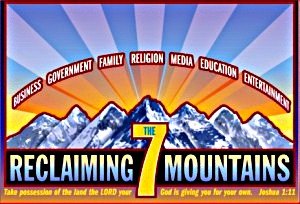 The third leaven is dominion theology: the belief that the church must take over the systems of the world before Jesus can return. One scholarly summary of Wagner’s ecclesiology says central to NAR theology is that the church, under apostles and prophets, must take dominion of the earth, including business, government, arts, entertainment, media, family, and education. But Jesus said, “My kingdom is not of this world” (John 18:36). The Bible does not teach that the church Christianizes the whole world before Christ returns. It teaches apostasy, deception, persecution, and a final antichrist system before the visible return of Jesus (Matthew 24:4–14; 2 Thessalonians 2:3–8; Revelation 13). The stone that destroys the kingdoms of this world in Daniel 2 is not the church taking over gradually; it is the kingdom of God coming by divine intervention. Christ returns and then reigns.
The fourth leaven is the claim that modern apostles and prophets have advanced revelation that ordinary Christians, pastors, elders, and historic churches lack. This creates spiritual elitism. Once a church accepts this, the Bible is no longer functioning as the final authority in practice. The “apostle” or “prophet” becomes the interpreter of what God is “now saying.” But Jude says we must “earnestly contend for the faith which was once delivered unto the saints” (Jude 3). Paul told Timothy that Scripture is able to make the man of God “perfect, throughly furnished unto all good works” (2 Timothy 3:16–17). If Scripture thoroughly furnishes the church, then no new apostolic revelation is required to complete the church’s mission.
The fifth leaven is a new form of church government. Traditional biblical church oversight is elders, pastors, and deacons serving under Christ the Head (Acts 14:23; 1 Timothy 3:1–13; Titus 1:5–9; 1 Peter 5:1–4). NAR government places churches under apostles and prophets who may govern beyond one local congregation. NAR leaven teaches apostles and prophets claim greater authority than pastors and elders, often extending over multiple churches, workplaces, cities, and nations. This is how churches can be collected or hijacked: first the language changes, then the guest speakers change, then the books and songs change, then the pastor is pressured to “align,” and finally the church is no longer practically governed by Scripture and local elders but by outside apostolic influence.
The sixth leaven is spiritual pride disguised as spiritual warfare. NAR teaching often gives believers the sense that they are an elite army with authority to decree, bind territorial spirits, shift nations, command angels, open portals, and legislate in the heavens. But Scripture gives a more sober pattern. We resist the devil by submitting to God (James 4:7). We stand by putting on the whole armor of God (Ephesians 6:10–18). We overcome by the blood of the Lamb, the word of our testimony, and loving not our lives unto death (Revelation 12:11). The weapons are truth, righteousness, the gospel, faith, salvation, the Word of God, and prayer—not mystical dominion techniques. The seventh leaven is the replacement of the cross with conquest. Paul said, “I determined not to know any thing among you, save Jesus Christ, and him crucified” (1 Corinthians 2:2). NAR language often centers on glory, power, dominion, revival, influence, and signs. But the apostolic gospel centers on Christ crucified, risen, exalted, and coming again. The true church does not overcome by becoming famous, wealthy, politically dominant, or culturally celebrated. It overcomes by faithfulness to Christ, even under pressure, rejection, and persecution.
The cuckoo bird is known for brood parasitism: it lays its egg in another bird’s nest and lets the other bird raise its young. Some cuckoos use nests built by other species instead of building their own.
That picture fits the way NAR influence can work in churches.
The NAR often does not begin by building a church from the ground up through biblical discipleship, sound doctrine, elders, prayer, and the preaching of Christ crucified. Instead, it can look for an already existing church, one that already has people, buildings, finances, worship teams, volunteers, and spiritual hunger. Then it drops its “egg” into that nest: new apostolic language, prophetic activation, Bethel-style worship, impartation meetings, Sozo, destiny teaching, kingdom-now dominion language, and submission to modern apostles and prophets.
At first, the egg looks harmless. It is just a conference, a book study, a worship song, a guest speaker, a “revival culture” seminar, or a prophetic ministry night. But once the egg is accepted, it begins to grow inside a nest that others built. The church may still have the old name on the sign, but the spiritual DNA inside the church begins to change.
Jesus warned about this kind of hidden spread when He said, “Beware of the leaven of the Pharisees and of the Sadducees,” and Matthew explains that He was speaking about their doctrine (Matthew 16:6, 12). Paul also said, “A little leaven leaveneth the whole lump” (Galatians 5:9). Leaven does not need the whole church at first. It only needs a small place to begin.
The cuckoo picture is strong because the foreign egg eventually competes with the true offspring of the nest. In the same way, NAR doctrine often competes with the true fruit of biblical Christianity. Instead of repentance, it offers destiny. Instead of the cross, it offers greatness. Instead of Scripture as sufficient, it offers advanced revelation. Instead of elders guarding the flock, it offers apostles covering the church. Instead of waiting for the visible return of Christ, it offers a church that must conquer the world before Jesus can return.
This is how the takeover happens: not always by force, but by replacement.
Facebook post June 9, 2026
Related
Chris Rosebrough – New Apostolic Reformation – Some topics discussed in this interview include modern Apostles, the Latter Rain, the term New Apostolic Reformation (NAR), the Apostolic Commissioning of Todd Bentley, C. Peter Wagner, IHOP, Bethel, and the Seven Mountains Mandate.
Research
CRN has compiled a list of false teachers and several other professing Christians we’ve warned you about over the years. The list also contains those we must keep an eye on plus movements, organizations and “frauds, phonies and money-grubbing religious quacks” to mark and avoid as per Romans 16:17-18 such as those mentioned in the article.