 “Republicans have tried to attack these candidates on this basis by claiming they are “woke” or “fake” Christian leaders who fail to support the religion they claim membership in, yet the polls still seem to favor them. They rarely, if ever, respond to critics, but set their sights on the problems facing the voters they wish to reach, things like affordability. For a generation spending hours in the mire of online attention-grabbing, insults, and sensationalism, I imagine this gives them the perception of maturity and focus.”
(Jon Harris) There is a significant development this election cycle Christian conservatives should take notice of.
Democrats have by and large stayed away from talking about religion unless it is in certain minority communities. Tim Walz was fairly representative when he said while running for Vice-President that “We’re Lutherans, we don’t talk about religion much.” Continue reading
 “DataRepublican says she’s got her hands on thousands of transcripts and hundreds of recordings that point to an elaborate, coordinated effort to provoke a constitutional crisis right after the 2026 midterms.”
 “The 764 cult lives on Discord, gaming, and dark web chat sites. The group has the objective of “seeking to destroy civilized society through the corruption and exploitation of vulnerable populations, which often include minors…”
  Rowling believes that if a man is entitled to be treated as a woman, it follows that “No breast-feeding or rape support group should be allowed to exclude him. If he’s sexually orientated towards women, lesbians should include him in their dating pool. If convicted of a crime, even rape, he should be locked up with women.”
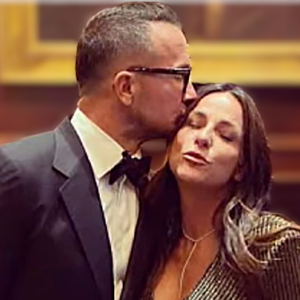 (Pulpit & Pen) Following is a thread about a recent interview with Carl and Laura Lentz to promote their new book ‘Overcome Infidelity.’ When asked about his time at Hillsong NY, Carl calls that church ‘the most beautiful thing in their life’ which produced ‘a real revival’ and where God moved, and that there won’t be anything like it again.
 “All of this is, of course, a direct assault on the Constitution and the Madisonian system of checks and balances, and the current crop of plotters are also quite explicit about reordering our society and laws after they kick Trump out of office and jail his supporters.”
  (Bill O’Reilly) First, a couple of general points. There is far too much political hatred in the USA. It’s foolish. We should be far beyond the Alexander Hamilton-Aaron Burr cycle. But we’re not.
 (Seth Brickley – TruthScript) Religious Signs on the Side of the Road – You have seen the sign as you drive by. It reads: “Science Is Real; Black Lives Matter; No Human Is Illegal; Love Is Love; Women’s Rights are Human Rights; Kindness Is Everything.” Recently, while on vacation in Virginia, I saw this sign in the front yard of a United Methodist Church. The Left’s embrace of these statements is truly religious in nature, and any religion opposed to biblical Christianity is led by Satan (
 Matthew 7:27 could describe the fall of Heritage USA and PTL Network. “And the rain fell, and the floods came, and the winds blew and beat against that house, and it fell, and great was the fall of it.”
 Scroll down the page past Today’s History to read the article.
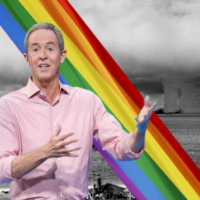 (Protestia) Andy Stanley, 68, announced this morning that he is stepping down as senior pastor of North Point Ministries and as lead pastor of North Point Community Church.
 “The offending material? Approximately 17 seconds of a documentary that used Angell’s own publicly available statements as evidence of the theological problems being examined.”
 (Matt Margolis – PJ Media)
  (The Dissenter) This is the problem with mixing religion with politics, and it’s the problem I’ve always had with Turning Point USA.
 “Married and unmarried women alike need to understand that they have been tasked with some of the most important areas of Christian life: instructing younger women and, frequently, children. These are gravely important things that require excellent, theologically sound, discerning women who have the maturity to recognize sin and error. Imagining that this is a feminist invention does not serve the church or the home well.”
 “With the Jesus Calling foundation giving more than half a million dollars to the group tasked with investigating it, it’s difficult to imagine a more clear
  At a private fundraiser last week for Michigan Senate candidate Abdul El-Sayed, AOC reached a startling conclusion. “If Abdul can win in Michigan, anybody can win anywhere,” she said. “We are going to break the electoral map everywhere, everywhere, because that is what it is going to take to guarantee health care to every American.”
 “All nine banks told the OCC they’ve revised their practices. The OCC says those reforms fall short and that no bank has “fully and publicly acknowledged” its “weaponization of finance against hardworking Americans.” JPMorgan, for its part, pinned the blame on WePay and claims the problem is now fixed.”
 “The selection of Erik Petrik as the next editor-in-chief highlights how far the organization has moved from conventional journalistic expectations. Petrik’s primary experience is in creative production, podcast development, film, and visual branding; he executive-produced the feminist series The Rise and Fall of Mars Hill that revived Mark Driscoll’s career and has overseen other audio and design initiatives at CT…”
  (The Dissenter) Obviously, Jesus never said anything about homosexuality.
 “People hear a song in church. They enjoy it. They search for it online. They discover the artist. Then they discover the church. Then they discover the pastor. Before long, they are listening to sermons, reading books, attending conferences, and absorbing an entire theological framework.”
 (Revolver) Remember when your mother told you to eat your vegetables because they were good for you?
 “Should pastors engage in the political process? They absolutely should. Because many political issues are, at their heart, theological issues and moral issues that strike at the very center of what we believe to be true and what we believe people need to know in order to flourish personally and as a culture….I think the pastors need to step up. I think throughout American history, pastors have had a strong voice at key moments in American political history.”
 “The bottom line is this: Republicans, right now, are in a much stronger position than they have been, not just compared to eight years ago, but over the long term as well, the relative health of the Republican Party, at least in terms of party registration, is pretty gosh darn good relative to the Democrats,”
 “Whether they call themselves communists, socialists, or Democratic Socialists of America, they call for power to the people, but their real goal is power and control over the people. They want to become the spigot for all our needs. They want to be our supplier, to decide who gets what – while always setting aside a more than generous portion for themselves.”