You really can’t make this stuff up.
Tainted Saint: Mother Teresa Defended Pedophile Priest
Apprising Ministries reminds you once again that she was a universalist and not a Christian.
Upon Watching Steven Furtick At His Code Orange Revival…
Who knows, maybe it really was the Lord Who led me.
Who Was Actually Behind The Decision To Not Rebroadcast Matt Chandler's Code Orange Sermon?
It does makes you wonder.
Steven Furtick, Matt Chandler & A “Programming Change”
Apprising Ministries with the latest on “Chandlergate” in this summary post concerning Chandler’s message being left out of Furtick’s revival rebroadcast.
Did God Give Beth Moore This Vision?
Apprising Ministries says rather than being held in high esteem as a role model this SBC Bible teacher needs to be finally be held accountable for her false teaching. I walk you through the heart of the matter here in this new article.
Why homosexuality IS different
For years, those of us doing ministry in the area of unwanted same-sex attraction and outreach to the gay community have worked diligently to help the church see that homosexual behavior is no different than any sin.
For those of us who struggled with same-sex attraction, the church’s seeming placement of homosexuality at the top of some created “sin hierarchy” was frustrating and hurtful to us. And we worried that as long as the church treated homosexual behavior as the worst of all sins, people would continue to fear the church instead of finding hope in the church. Read more
How to hear the voice of God
It’s really not rocket science. Via Apprising Ministries special correspondent Daniel Neades here.
Do You Know Your Bible Well Enough To Distinguish False Teaching From Biblical Christianity?
Apprising Ministries reminds you that mysticism and syncretism is slithering into the mainstream. dr. James White gets to the critical matter in this video clip.
Beth Moore To Speak For Hillsong Church
Apprising Ministries has been showing you that this SBC sponsored Bible teacher is really getting further off-track in a hurry, which you’ll here in this new article.
Who Is This Who Even Forgives Sins?
by Mike Ratliff
48 εἶπεν δὲ αὐτῇ· ἀφέωνταί σου αἱ ἁμαρτίαι. 49 καὶ ἤρξαντο οἱ συνανακείμενοι λέγειν ἐν ἑαυτοῖς· τίς οὗτός ἐστιν ὃς καὶ ἁμαρτίας ἀφίησιν; (Luke 7:48-49 NA27)
48 And he said to her, “Your sins have been forgiven.” 49 And the ones reclining with him began saying among themselves, “Who is this who even forgives sins?” (Luke 7:48-49 Possessing the Treasure New Testament V1)
In Luke 7:36-50 there are three main characters. There is our Lord Jesus Christ, Simon the Pharisee, and an unnamed woman who is referred to in v37 and v39 simply as ἁμαρτωλός (hamartōlos), “sinful, sinner.” The events in this passage take place at a meal in Simon’s home and there are others reclining at the table with them. The unnamed woman is uninvited. These events take place in Galilee immediately after John the Baptist’s disciples have come to our Lord on his bequest to confirm whether Jesus is indeed the Messiah. He then shows the Pharisee’s hypocrisy in vv31-35 for rejecting John the Baptist even though he lived in rigid abstinence even though they demanded that of our Lord while the message preached by both was the same. Then in v36 one of these Pharisees, Simon, invites Jesus to eat with him.
Narcigesis
 NARCIGESIS [nahr- si -jee’ -sis]
[(From: narcissus; 1540–50; < Latin < Greek nárkissos plant name, traditionally connected, by virtue of plant’s narcotic effects, with nárkç numbness, torpor; probably from a pre-Gk. Aegean word, but associated with Gk. narke “numbness” (see narcotic) because of the plant’s sedative effect.) (From: eisegesis; 1890–95; < Greek eisḗgesis, equivalent to eis- into + ( h ) çge- (stem of hçgeîsthai to lead) + -sis -sis {C19: from Greek eis into, in + -egesis, as in exegesis}.)]
ORIGINS:
Classical Mythology: a mythological youth (Narcissus) who fell in love with his own image reflected in a pool and wasted away from unsatisfied desire, whereupon he was transformed a plant bearing his name, commonly associated with an amaryllidaceous plant of the Eurasian genus Narcissus, esp N. poeticus, whose yellow, orange, or white flowers have a crown surrounded by spreading segments.
Classical Psychology: “Narcissists” are people completely absorbed in themselves. (See narcissism.) Inordinate fascination with oneself; excessive self-love; vanity.
noun
- The reading of one’s own life experiences and/or that of another’s life experience, into the text of Scripture; the need to make the Bible all about themselves.
- An interpretation of Scripture based on the interpreter’s self-authority, particularly driven by self-esteem, self-actualization, mystical experiences and/or the interpreter’s “felt needs.” (See Sola Experientia)
- A personal and/or mystical interpretation of Scripture based on the interpreter’s own ideas, biases, opinions, feelings, attitudes, beliefs, experiences, impressions, dreams, revelations, or the like, rather than based upon the plain meaning of the text.
- The reading of one’s own doctrinal theories into Scripture (as opposed to exegesis, which is a critical explanation or interpretation of a text or portion of biblical text), particularly as a result of personal experience. (See Sola Experientia)
- Self-centered, self-defined and self-authenticating biblical interpretation, application and counsel.
- The reading of one’s own interpretation into Scripture based upon the egotistic belief that all things in Scripture are not alike plain in themselves, nor alike clear unto all; and that only the learned, the elect, or the leadership elite (of which the interpreter considers himself), may attain unto a sufficient understanding of them. (See Plura Scriptura)
- The egotistical drive to invent new theologies, doctrines, revelations, applications and philosophies about Scripture, often manifested in self-aggrandizement activities such as book publishing, conferences, setting up organizations and websites, money-making schemes and publicity drives.
- Oxymoron: Subjective exegesis.
adjective: narcigetic, narcigetical
See PLURA SCRIPTURA and SOLA EXPERIENTIA
*Adapted from http://www.dictionary.com/
See also:
Paul Washer On The Seeker-Attractional Gospel
Apprising Ministries brings you this short video clip.
Sola Experientia
The fact is, mysticism is right now becoming more mainstream e.g. via SBC Bible teacher Beth Moore. Apprising Ministries is keeping you up to date concerning new terminology like this.
Steven Furtick Brings Best "In Honor Of Bishop Jakes"
Code Orange apostasia-palooza is now underway and Apprising Ministries brings you an interesting behind the scenes video clip here.
The Smackdown—John Piper Debates Rob Bell
Apprising Ministries lets you know it really was a quite animated event.
Beth Moore The Mystic
Uber-popular Southern Baptist Bible teacher Beth Moore complained via Twitter to her followers about being associated with mysticism. Apprising Ministries now shows you it is an accurate label in this well-documented article. You’re invited to examine the evidence for yourself.
Desiring God Pulls Lectio Divina Endorsement
Apprising Ministries brings you the very latest on this sad situation in this piece.
Plura Scriptura
Roman Catholic contemplative mysticism slithers throughout the mainstream of the church visible and as charismatics embrace it we’re awash with people claiming God is speaking to them outside of Scripture.
Apprising Ministries now brings you a key tenet of this reversal of the Protestant Reformation with this definition here.
Access not Impetuosity
by Mike Ratliff
7 οὗ ἐγενήθην διάκονος κατὰ τὴν δωρεὰν τῆς χάριτος τοῦ θεοῦ τῆς δοθείσης μοι κατὰ τὴν ἐνέργειαν τῆς δυνάμεως αὐτοῦ. 8 Ἐμοὶ τῷ ἐλαχιστοτέρῳ πάντων ἁγίων ἐδόθη ἡ χάρις αὕτη, τοῖς ἔθνεσιν εὐαγγελίσασθαι τὸ ἀνεξιχνίαστον πλοῦτος τοῦ Χριστοῦ 9 καὶ φωτίσαι [πάντας] τίς ἡ οἰκονομία τοῦ μυστηρίου τοῦ ἀποκεκρυμμένου ἀπὸ τῶν αἰώνων ἐν τῷ θεῷ τῷ τὰ πάντα κτίσαντι, 10 ἵνα γνωρισθῇ νῦν ταῖς ἀρχαῖς καὶ ταῖς ἐξουσίαις ἐν τοῖς ἐπουρανίοις διὰ τῆς ἐκκλησίας ἡ πολυποίκιλος σοφία τοῦ θεοῦ, 11 κατὰ πρόθεσιν τῶν αἰώνων ἣν ἐποίησεν ἐν τῷ Χριστῷ Ἰησοῦ τῷ κυρίῳ ἡμῶν, 12 ἐν ᾧ ἔχομεν τὴν παρρησίαν καὶ προσαγωγὴν ἐν πεποιθήσει διὰ τῆς πίστεως αὐτοῦ. 13 διὸ αἰτοῦμαι μὴ ἐγκακεῖν ἐν ταῖς θλίψεσίν μου ὑπὲρ ὑμῶν, ἥτις ἐστὶν δόξα ὑμῶν. (Ephesians 3:7-13 NA27)
7 Of which I became a minister according to the gift of the grace of God having been given to me according to the working of his power. 8 To me, the least of all the saints, this grace was given to the gentiles to preach the unsearchable wealth of Christ 9 and to enlighten all men as to what is the stewardship of the mystery hidden from the ages in God, the one who created all things 10 that it might be made known now to the rulers and the authorities in the heavenlies through the Church the many faceted wisdom of God 11 according to the plan of the ages, which he made in Christ Jesus our Lord 12 in whom we have boldness and access in confidence through faith in him. 13 Therefore, I ask you not to despair concerning my afflictions for you, which is for your glory. (Ephesians 3:7-13 Possessing the Treasure New Testament V1)
In our last post, Boldness not Insolence, we saw from Ephesians 3:7-13 (above) that those truly in Christ have indeed been given the incredible privilege of unimpeded access to the Throne of Grace, and that means they can come “boldly” to their Heavenly Father in Christ-confidence, not self-confidence. From this same passage we also see the “access” all in Christ have as a granted privilege. This access to come boldly to God in prayer has been granted only to those in Christ, no one else. Even so, this privilege is not to be taken for granted by Christians being impetuous or impulsive, that is, doing things hurriedly, or rushing about. I often despair of my lack of time in prayer each day as I take small parts here and there and pray hurriedly through them. What good is that? When we do that, our prayers become habitual and rushed and nothing more than a form of idolatry.
Old MacDonald Had A Conference
Apprising Ministries brings you an interesting video clip here.
On John Piper Hearing from God
Perhaps some clarification on what John Piper’s intentions were at Passion. More questions, more hope for discussion: On John Piper Hearing from God
The Heart Of The Matter With John Piper And Lectio Divina
Apprising Ministries points you to it in this piece.
God's Plan For Temptation
Apprising Ministries with an encouraging devotional teaching from John MacArthur.
Gladiator-style takedown of demonic forces, Part 1
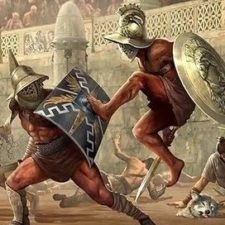 (Marsha West – Christian Research Network) A large number of Christians throughout the world consider themselves to be spiritual warfare prayer warriors. What they do is known as “intercessory prayer.” Most likely these prayer warriors are connected to a deliverance ministry. Deliverance ministers use “strategic level prayer” to “bind” the “territorial spirits” to remove demons who are in control of organizations, communities, cities and in some cases entire nations so that evangelism will go unimpeded. These demon fighting gladiators believe that poverty and other societal troubles will not be eliminated until “demonic strongholds” are torn down and demons are “bound.”
The aim of the Spiritual Warfare movement (SWM) is to take “dominion” over societal institutions and government. Once they have accomplished this lofty goal they’ll take over the kingdoms of this world and build a literal Kingdom of God on earth. This is known as Kingdom Theology.
What is the basic premise of Kingdom Theology?
[M]an lost dominion over the earth when Adam and Eve succumbed to Satan’s temptation in the Garden of Eden. God “lost control” of the earth to Satan at that time, and has since been looking for a “covenant people” who will be His “extension,” or “expression,” in the earth and take dominion back from Satan. This is to be accomplished through certain “overcomers” who, by yielding themselves to the authority of God’s apostles and prophets for the Kingdom Age, will take control of the kingdoms of this world. (Online source)
Kingdom Theology and deliverance/spiritual warfare prayer stem from the New Apostolic Reformation/Dominionism (NAR/DOM). I’ve covered NAR/DOM in other articles that can be read here. The purpose of this piece is the SWM, as this false teaching has spread through Charismatic and Pentecostal churches like a wildfire on a gusty day and it’s rearing its ugly head in conservative churches.
Many spiritual warfare prayer warriors are sincere people who believe what they’re doing is serious work, thus they don’t enter into it lightly and are very cautious when they engage in intercessory prayer. They also admit that they’re still learning the process of warfare prayer. The process they go through to rid the “client” of demons is called “therapy.” A person who’s cleansed of “cosmic beings” is deemed a “survivor.”
Some in the deliverance ministries put their focus on so-called demon possessed people. As I said, many of them are serious sincere people who do not take exorcism lightly — but the fact remains that they’re involved in an unbiblical practice.
So — imagine for a moment a sixty-five year-old woman who has never seen the inside of a gym, toe to toe with a burly man she believes to be possessed, body and soul, by a cosmic being. After a lengthy conversation with the man, she has determined that he’s possessed by a “demon of alcohol.” So the diminutive woman musters up her courage and glares into the drunk’s blood-shot eyes, “In the Name of Jesus Christ,” she bellows, ” I command you, demon of alcohol, depart from this man!” fully believing she has just sent a demon to the pit of hell. She also believes that the drunk has been set free from the demon once and for all.
You may be asking, “If a ‘demon of alcohol’ exists, how could the woman know with certainty that it had packed its bags and fled the scene never to return again?”
Before I answer the question, I need to provide some background on angels and demons. For the Christian to get the facts on creatures that dwell in the spiritual realm he or she must go to the final authority on these sorts of things — the Holy Bible. God reveals what He wants us to know about the supernatural world in the pages of Scripture. Anything beyond what the scriptures expressly teach on angels and demons is nothing more than pure speculation. Those in the SWM have taken speculation to a whole new level for the simple reason that much of their doctrine is based on just that — speculation. Also, they claim they’re receiving “new revelation” that replaces the Word of God even though Paul clearly taught that the revelation he and the other apostles received was the complete and final revelation from Jesus Christ. Paul even cursed those who brought a different gospel:
But though we, or an angel from heaven, preach any other gospel unto you than that which we have preached unto you, let him be accursed. (Gal. 1:8)
So, what does Scripture tell us about angels and demons? In Heb. 1:14 it says they are personal spiritual beings. Because they don’t have physical limitations they’re not bound by the laws of physics. Angels possess intellect (Mat. 8:29, 2 Cor. 11:3), emotions (James 2:19, Rev. 12:17), and will (Luke 8:28-31, 2 Tim. 2:26).
From the book of Genesis we learn that there was a rebellion in heaven led by the angel Lucifer who wanted to exalt himself above God. The rebel didn’t stand a snowball’s chance in hell against Almighty God and he lost the battle, big time. Thereafter Lucifer and one third of the angels who fought alongside him were expelled from the throne room of God. That’s the nutshell version!
There are over 40 names for Lucifer. He is the chief of demons…the god of this world (Earth)…Satan, serpent, devil, evil one, accuser, adversary, dragon, devourer, destroyer, tempter and the wicked one. Some of the names describe his character, i.e. deceiver.
When his time is up Satan won’t just cease to exist, he will be cast into the lake of fire and brimstone where he will be tormented for eternity. (Rev. 20:10)
Scripture refers to demons as spiritual forces of evil. These creatures are highly intelligent. They’re also vengeful, hateful, cruel, cunning and deceptive, with incredible supernatural powers. Demons are capable of causing physical harm and mental anguish. They have no regard for human life, marriage or the family. They can cause dumbness, deafness and suicide. They can possess the human body as well as animals and influence bodies and minds for evil. (Dabbling in the occult invites demon possession, and for the Christian, demon oppression.)
Demons recognize Christ as “the Son of God” and appeal to Him (Mark 5: 6-7).
One of the ways demons actively oppose the plans of God is by promoting false doctrine.
Ephesians 6:12 states Satan has a hierarchy of demons in his kingdom, “For we wrestle not against flesh and blood, but against principalities, against powers, against the rulers of the darkness of this world, against spiritual wickedness in high places.” In verse 15 Paul warns of the “fiery darts of the wicked.” Paul’s fiery dart metaphor was his way of warning believers to “put on the full armor of God” because evil spirits can inflame human emotions. Often times a demon will manipulate its target’s emotions causing him/her to fall into sinful behavior. Wearing the armor of God is the way Christians defend themselves against the forces of evil. (More on the armor of God here)
Satan is not omnipresent which means he cannot be everywhere. Only God is omnipresent. Noted theologian J. I. Packer explains omnipresence thusly:
“God is here, there, and everywhere, and his mind and hand are on everything. We are never out of his sight (Psalm 139), and we cannot get away from him (John 1).”
Which brings me to my point: “Binding Satan” is a complete waste of time and energy. Odds are that the prayer warrior will have a much greater chance of winning the lottery than binding Satan.
Satan is indeed a force to be reckoned with, but his powers are limited. Even so, after his fall from heaven Michael the archangel would not confront him without seeking the Lord’s help (Jude 1:9).
The following is an excerpt from Biblical Discernment Ministries (BDM) essay entitled Spiritual Warfare: Can a Believer Be Demon Possessed?:
[T]he only legitimate casting out of demons happened in the time of Christ and the apostles. This demonstrated that Jesus truly was the Messiah the Old Testament predicted would come. The Jews at that time would recognize that casting out of demons meant that the Messiah was present and offering the kingdom to the nation Israel. The apostles were given this authority to cast out demons as representatives of Christ. This authority cannot be transferred to anyone else.
The sign miracles Jesus performed were special and unique. No one has ever duplicated the miracles Jesus performed to confirm his messianic claims. Every false teacher and cult leader today claims “sign miracles” as a way of confirming their false teaching. None of them has walked on water. None of them has called a person who has been dead four days out of the grave with the words, “Come forth!” Moreover, no so-called miracle worker has been resurrected after death — not even famed faith-healer Kathryn Kuhlman.
Not only did Jesus raise the dead, after He was beaten to a bloody pulp, crucified and died, He came out of the tomb very much alive. His face was no longer disfigured from the beating he took, and there wasn’t a speck of blood on His resurrected body, only marks in His hands and feet where spikes were driven through flesh and bone and an opening where a Roman soldier drove a spear into His body. Moreover, after the resurrection Jesus appeared to more than 500 people at one time. (More on the resurrection account here)
What many Christians fail to realize is that although God continues to perform miracles today the “signs and wonders” we find in the Bible are not the norm today.
Earlier in the article we learned that when Satan was allowed to run Job through the ringer, he did not “speak to Satan, bind him, or send him to the pit. Job’s responsibility was to be faithful, resist, and stand firm.”
Later BDM says:
In the book of Revelation, demonic activity picks up again. But even in the sections which are addressed to the churches (chapters 1-3), there are no directions for speaking to demons. Even with the Church living under demonic pressure, where Satan’s throne was (Rev. 2:13), there were no commands to bind and/or cast out Satan and his demons. When Jesus spoke to the church at Thyatira, He did not say, “Bind Satan” or “You have a territorial demon, drive him out.” Even those believers who were under the influence of the wicked Jezebel were not told to break her demonic power. Revelation gives us a glimpse into the demonic world and what is taking place behind the scenes. However, we do not have any situation where believers are running around binding and casting out demons.
More from BDM:
It is all too common today for a spiritual warfare teacher to get up and bombard his listeners with story after story, experience after experience, from which he draws conclusions that form his views on spiritual warfare. More often than not, this kind of “skyscraper preaching” (sermons with one story stacked upon another) results in an approach to spiritual warfare that is built upon practices and techniques which do not measure up to God’s Word.
For example: often one begins to teach that Christians can be demon-possessed or something similar; Christians can inherit curses from parents; Christians need deliverance from certain kinds of sins in addition to the forgiveness received at salvation; Christians need to speak or do things to protect themselves and their loved ones from the demonic; Christians can boss Satan around by rebuking, binding, taking authority over him, or running him out of town, usually by sundown, all in the name of Jesus; demons occupy territories because of specific sins of those people which supposedly have given a basis for the demonic stronghold, instead of by permission of the sovereign will of God. These kinds of beliefs are mere superstition, the product of false mystical experiences which do not match up with the teaching of Holy Writ.
Getting back to the question posed earlier, would the “spirit of alcohol” flee when confronted by an exorcist, never to return? No — for the simple reason that there is no such thing as a “spirit of alcohol.”
Rest assured there is no spirit of any sinful human trait. Our peccadillos are works of the flesh:
Now the works of the flesh are manifest, which are these; Adultery, fornication, impurity, licentiousness, idolatry, witchcraft, hatred, strife, jealousy, wrath, selfishness, divisions, heresies, envyings, murders, drunkenness, revelings, and such like. (Galatians 5:19-21)
Paul states that “they who do such things shall not inherit the kingdom of God.”
The fruits of the Spirit are:
“love, joy, peace, longsuffering [patience], gentleness, goodness, faith, meekness [humility], self-control.” (Galatians 5:22, 23)
In part 2 I’ll expose some of the false teachers who invented spiritual warfare prayer out of their fertile imaginations.
Helpful Information:
Angels, Demons and Spiritual Warfare
Scriptures on angels from Sola Scriptura Project website
Cosmic Hierarchy — By Dr. Tom R. Hawkins, International Society of Deliverance Ministries website. Here you will find a plethora of unbiblical teaching.
© Marsha West, 2012.