 “When it comes to ordained clergy in the PCA identifying themselves as gay in “orientation,” let us not pretend as though we really believe that liberty is called for. I can think of churches in the PCA that would not allow me within 100 yards of their pulpit to preach on the subject of homosexuality and human identity precisely because they know I would refute the category of “sexual orientation,” the theology of Revoice, and Side-B homosexuality…”
(Todd Pruitt – Reformation 21) “In essentials unity, in non-essentials liberty, in all things charity” (In necessariis unitas, in dubiis libertas, in omnibus caritas). That statement has often been attributed to St. Augustine who almost certainly did not say it…. Continue reading
 (Protestia) Despite the financial collapse and implosion that has led Lifeway, the publishing arm of the Southern Baptist Convention to close all its retail stores, lay off thousands of staff, and lose tens of millions of dollars, they continue to stick by their convictions; which is to platform every sort of errant and aberrant author that they can make a buck off of while denying their readers a best-selling balm to the soul.
  (Kyle Becker) Tucker Carlson, as promised, delivered “meaningful evidence of voter fraud” in the Georgia election.
 (Protestia) Ravi Zacharias International Ministries (RZIM) President Michael Ramsden posted a video a few days ago apologizing for his own role and complicitness in the Ravi Zacharias sex scandal.
 “Not since the collaborative effort to conceal the identity of Eric Ciaramella, the so-called “whistleblower” who helped launch Trump’s first impeachment trial has the political world worked so hard to keep secret a name everyone in D.C. already knows. Amid months of speculation, investigative reporter Paul Sperry recently named Lt. Michael Byrd as the officer who shot and killed the unarmed female veteran.”
 Need to read articles you may have missed this week…
 “In many instances, when a law enforcement officer kills an individual for any reason, that officer’s name is publicly released. But not in the case of Ashli Babbitt. Instead, there is a determined effort to cover up the full circumstances of this homicide.”
 “At a time when Biblically faithful colleges and seminaries are under incredible pressure to conform to this world just to survive, it is vital that we do not compromise the truth and morality of the Christian faith.”
  “Marc Morano also said the radical left Senate Majority leader, Chuck Schumer is urging Biden to declare a national climate emergency. Why? Just like a blue-state governor, Biden would then be able to use emergency powers.”
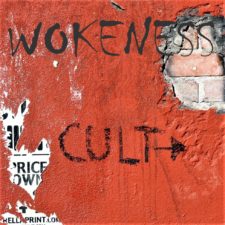
 “Being woke is a time-consuming hobby. You have to be constantly vigilant, on guard against racist behavior by white folks. You must be easily offended by the un-woke and point out their many, many mistakes.”
  In the lead-up to a pro-Trump “Million MAGA March” protest in November, Milley compared the protesters to the Nazi “brownshirts,” the militia that fueled Hitler’s rise to power. The Joint Chiefs chairman told staff that he feared the protest “could be the modern American equivalent of ‘brownshirts in the streets.’”
 “Why in our 233rd year of the republic are Democrats so intent to destroy the Electoral College, pack the court, admit new states to the Union, junk the filibuster, and federalize national election laws? What was so wrong with assimilation, integration, intermarriage, the “content of our character,” and race as incidental rather than essential to who we are? What has the woke revolution offered us instead?”
 There are enough loopholes in the proposed changes to continue to allow Side B Homosexuals to continue as officers in the PCA (or be admitted to the PCA). All a man needs to do is to say that his identity in Christ is greater than his identity as a homosexual. All he has to say is that he struggles with this sin, that he knows that some have been delivered from it, and that he wishes to make progress over this sin – but he has not.
  “Spurgeon would spend much of the night studying the Scriptures, trying out different “skeletons” (sermon outlines), and praying for the Spirit to guide him in preparing the sermon.”
  (Judi McLeod – Canada Free Press) How to survive in a world gone mad? It starts with refusing to be duped by governments, their bureaucracies and the media. A virus, hyped as a pandemic—with a 99 percent recovery rate—isn’t going to kill off the world—no matter what ‘scientists’ a la Dr. Anthony Fauci predict.
 (Selwyn Duke – The New American) Fascism founding father Benito Mussolini once summarized his ideology thus: “All within the state, nothing outside the state, nothing against the state.” This comes to mind when considering that the Democrat establishment has been doing an end run around the First Amendment, using Big Tech as a proxy to stifle dissenting views. Now there’s a new front in this battle, too:
  (Robert Kraychik – Breitbart) Peter Schweizer, president of the Government Accountability Institute (GAI), said on Monday that his organization had confirmed that President Joe Biden “was a direct beneficiary” of Hunter Biden’s
  (Greg Piper – Just The News) Oregon educators are fighting for their jobs after starting a campaign to keep biological males and females in their own school restrooms and locker rooms and make it optional for school employees to use their students’ preferred gender pronouns.
 (Protestia) A day after the Evangelical Dark Web exposed the fact that the notorious San Francisco Gay Men’s Chorus (SFGMC) included
 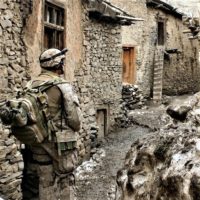 (Bryan Preston – PJ Media) With Tucker Carlson sparring with the National Security Agency and critical race theory becoming a hot topic among school boards nationwide, the Pentagon took time out from its own divisive and unit-wrecking extremism lectures long enough to notice that the Taliban is sweeping across Afghanistan. Fox
  In April 2017, while singing “By the Blood,” Beni Johnson’s daughter-in-law, Jenn Johnson, asked members of Bethel Church in Redding CA to pray for a “cancer free zone” during a worship service. Four years later Beni is undergoing chemo. Protestia has the story:
 “This false gospel of believing that we can create our own existence through our faith is heretical.”
 “Sohne and Rosser created a musical in 2016 about “bacha bazi” or “boy play,” a custom in Afghanistan involving child sexual abuse between older men and young adolescent males or boys—known as dancing boys. The boys are trained to dance seductively in front of older men at parties and are often sexually abused.”
 “From the podium, outgoing president J.D. Greear and Resolutions Committee Chairman James Merritt both tried to embarrass Baptists who dared to raise concerns about CRT. Both suggested these voters were afraid of persons of color when no such fears had been expressed.”
 “Mark Davis, who has testified as an expert witness multiple times in disputed election cases, believes Trump might have won a challenge to the Georgia election results had a court actually heard his case.”